



Beyond 99% Purity: Why Parachlorophenol Control in Climbazole Matters for Formulators
Release time: 2026-04-22
Índice
The “99% Purity” Trap in Chemical Sourcing
When purchasing managers source Climbazole (CAS 38083-17-9) on global B2B platforms, the first specification they look for is usually “Assay ≥ 99.0%”. While a high main content is essential, focusing solely on this number can be a costly mistake.
For high-end cosmetic brands, especially those operating in the highly regulated European and North American markets, the real danger hides in the remaining 1%. The most critical, yet often overlooked, parameter is the trace presence of Parachlorophenol (PCP). Relying on a supplier who only boasts about 99% purity without addressing specific impurity profiles can lead to formulation instability, severe skin sensitization, and ultimately, devastating product recalls.
Unmasking the Synthesis: Where Does Parachlorophenol Come From?
To understand why Parachlorophenol is a persistent threat, we must look at the chemical synthesis route of Climbazole.
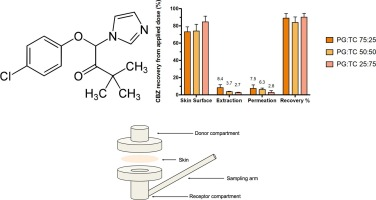
Climbazole is typically synthesized via a multi-step reaction. The process begins with 4-Chlorophenol (Parachlorophenol) as a foundational starting material, which undergoes etherification and subsequent reactions with imidazole derivatives. Because Parachlorophenol is heavily involved in the upstream synthesis, any incomplete reactions or inadequate purification steps downstream will leave residual, unreacted Parachlorophenol trapped within the final Climbazole crystal lattice.
Why is this a problem? Parachlorophenol is a highly active, irritating, and toxic phenolic compound. Even in minute trace amounts, it carries a distinct, unpleasant medicinal odor that is incredibly difficult to mask with cosmetic fragrances. More importantly, it acts as a severe skin and eye irritant, directly contradicting the mildness required for premium anti-dandruff shampoos and scalp treatments.
Setting the Gold Standard: BLIT Chemical vs. Market Average
In the current supply chain, many trading companies source low-grade Climbazole from manufacturers utilizing outdated crystallization techniques. These standard market grades often contain Parachlorophenol levels exceeding 300ppm, or worse, the supplier does not test for it at all.
No BLIT Química, we recognize that premium cosmetic formulations demand pharmaceutical-grade impurity control. Through our proprietary multi-stage solvent recrystallization technology, we aggressively strip away phenolic impurities.
- Our Standard: We strictly control residual Parachlorophenol to ≤ 100 ppm (and frequently achieve batches < 50 ppm).
- The Analytical Proof: You don’t have to take our word for it. Every batch manufactured in our facility is subjected to rigorous testing using advanced Gas Chromatography (GC) e High-Performance Liquid Chromatography (HPLC). These state-of-the-art diagnostic tools allow our QA/QC laboratory to detect trace volatile impurities down to the parts-per-billion (ppb) level, ensuring absolute compliance and safety for your end consumers.
The Buyer’s Checklist: How to Read a Climbazole COA Like an Expert
To protect your brand and ensure supply chain transparency, purchasing managers and R&D chemists must look beyond the headline numbers on a Certificate of Analysis (COA). Here is your due diligence checklist when evaluating a new Climbazole supplier:
- Assay (Main Content): Must be ≥ 99.0% (typically tested via HPLC).
- Parachlorophenol Limit: Demand a specific numerical limit on the COA, not just a “Pass” or “Conforms”. It must be explicitly stated as ≤ 100 ppm.
- Ponto de fusão: Look for a sharp, narrow melting point range (e.g., 96.0°C – 99.0°C). A broad or depressed melting point is the most obvious physical indicator of high impurity levels and poor crystallization.
- Loss on Drying (LOD): Should be strictly ≤ 0.5%. Excess moisture can accelerate the degradation of the active ingredient and introduce microbial risks during long-term storage.
- Color and Appearance: High-purity Climbazole should be a brilliant white crystalline powder. Any yellowish or off-white tint strongly indicates the presence of oxidized phenolic impurities.
Conclusion: Sourcing with Confidence
In the competitive landscape of personal care, formulation excellence begins with raw material integrity. Sourcing Climbazole from a manufacturer that prioritizes transparent impurity control is not just a regulatory necessity; it is a strategic advantage that protects your brand equity.
By understanding the origins of Parachlorophenol and demanding rigorous HPLC/GC testing data, you can confidently navigate the chemical supply chain and select a true manufacturing partner, rather than just a vendor.
Secure your supply chain today. Contact the technical sales team at info@blitchem.com to request our latest Climbazole COA, review our Parachlorophenol GC chromatograms, and request a high-purity sample for your lab evaluation.

